
Samosa Calories: How Many Calories in a Samosa? (2026 Guide)
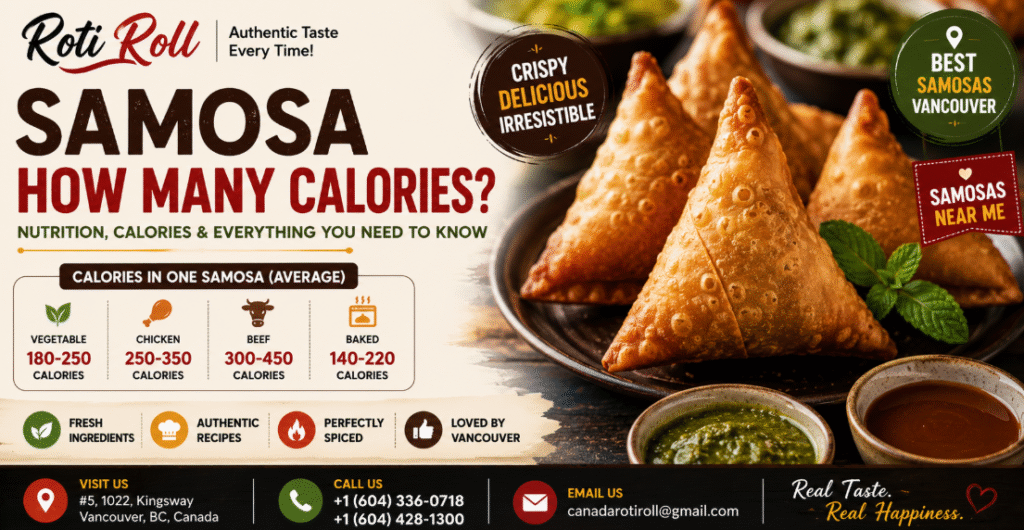
Whether you’re counting macros or just curious before ordering, the calorie question comes up almost every time someone reaches for a samosa. The honest answer: it depends on size, filling, and how it’s cooked. A small baked samosa can clock in under 150 calories, while a large restaurant-style fried version can push 400.
This guide breaks it all down — by type, by size, and by cooking method — so you know exactly what you’re eating. And if you’re in Vancouver looking to try a genuinely good one, we’ll point you there too.
How Many Calories Are in a Samosa?
The calorie count in a samosa varies primarily based on three things: filling type, size, and whether it’s fried or baked.
| Type of Samosa | Approx. Calories |
|---|---|
| Small Veg Samosa | 120–180 cal |
| Medium Potato Samosa | 220–280 cal |
| Large Punjabi Samosa | 300–400 cal |
| Chicken Samosa (medium) | 250–340 cal |
| Beef Samosa (medium) | 300–440 cal |
| Baked Samosa (medium) | 140–200 cal |
Values are estimates based on standard preparation methods. Exact numbers vary by recipe.
A standard medium-sized potato samosa — the kind you’d find at a good Indian or South Asian restaurant — sits around 250–280 calories per piece. That’s roughly in the same range as a small serving of french fries, but with more fiber and a far more interesting flavour profile.
Nutrition Breakdown: What’s Actually Inside a Samosa?
A typical medium potato-pea samosa (approx. 100g) contains roughly:
| Nutrient | Amount |
|---|---|
| Calories | ~250 kcal |
| Carbohydrates | 28–32g |
| Protein | 4–6g |
| Total Fat | 11–14g |
| Saturated Fat | 2–4g |
| Dietary Fiber | 2–4g |
| Sodium | 350–450mg |
The bulk of the calories come from two places: the refined flour pastry shell (maida dough is energy-dense) and the deep-frying oil absorbed during cooking. The potato and pea filling itself is relatively modest in calories — it’s the outer crust that does most of the caloric heavy lifting.
Calories by Samosa Type
Veg Samosa Calories
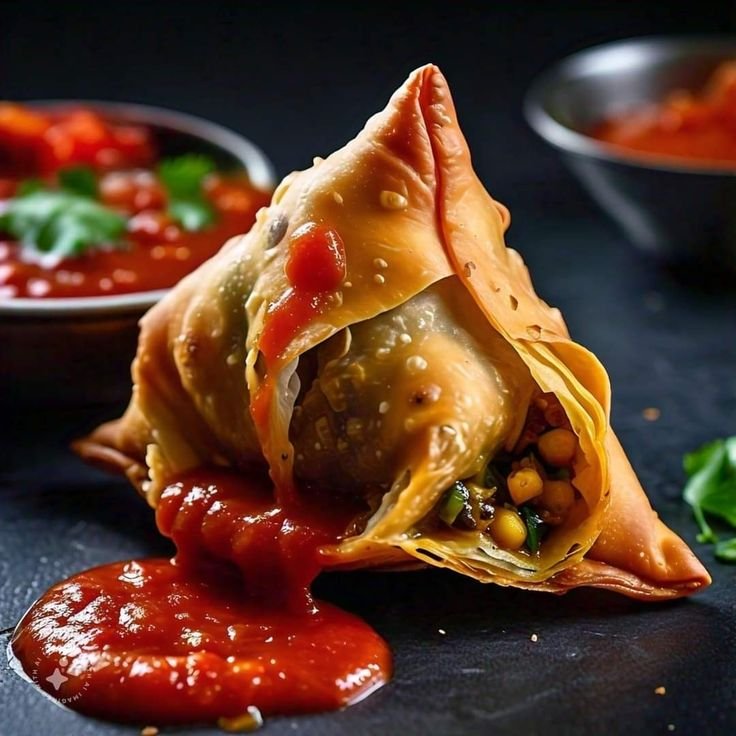
Classic vegetable samosas — filled with spiced potatoes, green peas, cumin, and coriander — are typically the lightest option. A medium veg samosa runs 180–260 calories depending on size and how much oil was used in frying.
If you want a veg samosa that takes it a step further, Roti Roll’s 2 Pc Large Veg Samosa (Indian Style) comes with your choice of tamarind sauce or no sauce — the sauce adds roughly 20–30 extra calories if you’re tracking.
Chicken Samosa Calories
Chicken samosas tend to run slightly higher than veg versions, primarily because minced chicken filling often includes oil, butter, or cream in the masala. Expect 250–340 calories for a medium-sized chicken samosa.
They’re also more filling per piece — higher protein content (around 12–16g per samosa) means you’ll likely feel satisfied with fewer pieces.
Beef Samosa Calories
Minced beef (keema) samosas sit at the higher end of the calorie range — typically 300–440 calories for a medium piece — because beef carries more fat than chicken or vegetables. That said, they’re rich in protein and iron, making them a genuinely substantive snack rather than just a vehicle for dough.
Mini/Cocktail Samosa Calories
Party-size samosas are a smart option if you’re watching intake. At roughly 70–120 calories each, you can have two or three without guilt. They’re popular at catering events and as appetizers for exactly this reason.
Fried vs. Baked Samosa: The Calorie Difference
The cooking method makes a real difference.
Fried samosas absorb a meaningful amount of oil during the cooking process. Depending on oil temperature and frying time, this adds anywhere from 50 to 120 calories per samosa compared to the same recipe baked.
Baked samosas lose the crunch factor slightly but come in significantly lower — usually 140–200 calories for a medium piece. Some modern bakeries and health-focused restaurants now offer air-fried versions that come close to baked in calorie terms while retaining more of the crispy texture.
If crunch is non-negotiable (and honestly, it often is), the trade-off is worth it — just be mindful of portions.
Are Samosas Healthy?
Samosas aren’t going to be mistaken for a salad, but they’re not junk food either — especially the traditional, freshly made variety. Here’s a fair assessment:
What works in their favour:
- Contain vegetables (potatoes, peas, onions) with fiber and micronutrients
- Spices like cumin, turmeric, coriander, and ginger have documented anti-inflammatory properties
- Meat-filled versions provide solid protein
- Made from real ingredients — no preservatives in freshly prepared samosas
What to be mindful of:
- Deep-fried versions are calorie-dense and high in fat
- Refined flour pastry offers little nutritional value beyond carbohydrates
- Sodium content can be high, especially in restaurant versions
- Easy to overeat — portion size matters here more than with many snacks
The practical bottom line: one or two freshly made samosas as a snack or side is a perfectly reasonable dietary choice for most people. The problems start with eating six in a sitting, not with eating samosas at all.
Tips for Enjoying Samosas with Fewer Calories
You don’t need to reinvent the snack — small adjustments make a real difference:
Go easy on the chutneys. Tamarind chutney is delicious but sugar-heavy. Mint-coriander chutney is the lighter option. Plain yogurt dip adds protein without much sugar.
Watch the pairing. Samosas alongside chai are a classic combination that keeps the overall calorie count reasonable. Pairing with a full-sugar soft drink adds 150+ calories before you’ve even looked at the food.
Two is usually enough. A medium-sized samosa is more filling than it looks. Two pieces with a cup of chai is a satisfying afternoon snack — you rarely need more than that.
Choose veg when you’re watching intake. The difference between a veg and chicken samosa is usually 60–80 calories per piece, which adds up over time.
How Samosas Are Made (And Why It Affects Calories)
The traditional samosa-making process directly shapes the final calorie count:
The dough is made from maida (refined flour), oil or ghee, salt, and water — kneaded until smooth and rested. A higher fat content in the dough means a crispier, richer shell, but also more calories.
The filling is prepared separately: potatoes and peas are cooked and mashed with a spice blend that typically includes cumin seeds, garam masala, dried mango powder (amchur), green chilli, coriander, and ginger. The spice mix is where regional variation really comes in — a Punjabi samosa filling tastes noticeably different from a Delhi or Hyderabadi version.
The shaping is done by hand — cones of dough are stuffed and sealed with a paste. The method affects the thickness of the shell, which in turn affects how much oil is absorbed during frying.
The frying happens in batches at a carefully managed oil temperature. Too hot and the exterior burns before the inside cooks; too cool and the dough absorbs excessive oil. Experienced cooks achieve a balance — a properly fried samosa is crisp, not greasy.
Best Samosas in Vancouver: Why Roti Roll Stands Out
Vancouver’s South Asian food scene is genuinely competitive — there are good samosas in this city. But a few things separate the great ones from the average:
Freshness of preparation. A samosa that’s been sitting in a warmer for two hours tastes noticeably different from one made the same day. At Roti Roll, same-day preparation is standard — it shows in the texture.
The spice balance. Overly greasy samosas are often under-spiced; they use oil to compensate for lack of flavour. A well-balanced filling needs less oil to taste good.
The crust. It should shatter cleanly when you bite into it, not bend. That requires the right dough ratio and proper frying temperature.
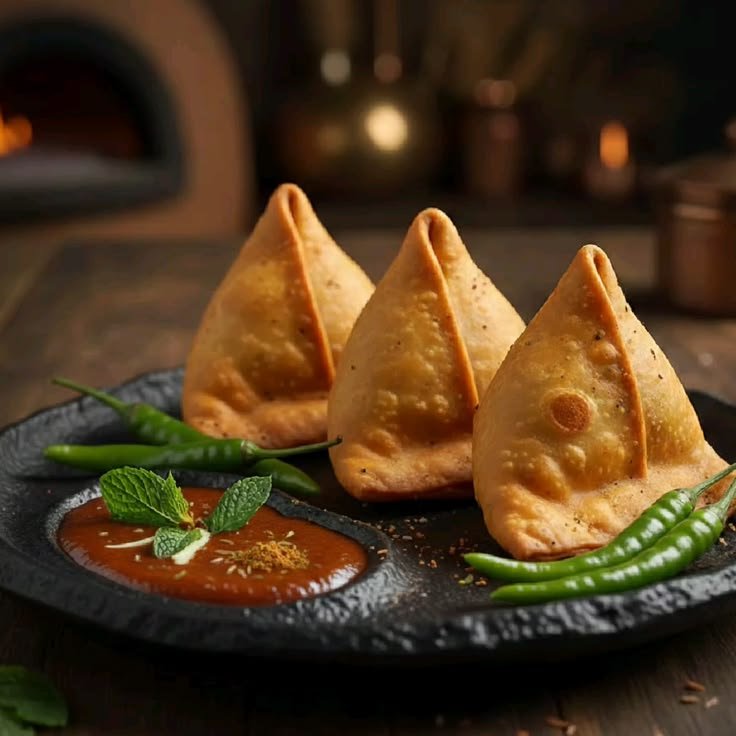
Roti Roll’s Large Veg Samosa (Indian Style) is served 2 pieces per order at $6.99, with the option of tamarind sauce. Both locations — Kingsway and Point Gray — carry them.
Roti Roll — Kingsway #5, 1022 Kingsway, Vancouver, BC 📞 +1 (604) 428-1300 Tuesday–Sunday: Open 24 hours
Roti Roll — Point Gray 4443 West 10th Ave, Vancouver, BC 📞 +1 (604) 336-0718 Mon–Wed: 10:00 AM–11:20 PM | Thu–Sun: 10:00 AM–5:20 AM
Frequently Asked Questions
How many calories are in one samosa?
A standard medium potato samosa contains approximately 220–280 calories. Smaller samosas run 120–180 calories; larger restaurant-style ones can reach 350–400 calories.
Is a veg samosa lower in calories than chicken or beef?
Yes, generally. A medium veg samosa is typically 180–260 calories versus 250–340 calories for chicken and 300–440 for beef. The difference comes primarily from protein and fat content in the filling.
Does baking instead of frying significantly reduce calories?
Yes — baking reduces calorie count by roughly 50–100 calories per samosa compared to frying, mainly by eliminating oil absorption. The texture trade-off is noticeable, though air-frying narrows the gap considerably.
Can I eat samosas while dieting?
Yes, with awareness of portions. One or two medium samosas as a snack fits into most moderate calorie targets. Pairing with low-calorie accompaniments (mint chutney, plain yogurt) rather than sugary drinks or heavy sauces helps.
Where can I find fresh samosas near me in Vancouver?
Roti Roll has two Vancouver locations — Kingsway (near Burnaby border) and Point Gray (near UBC). Both serve freshly prepared veg samosas daily. You can also order online directly from their menu.
What makes Roti Roll’s samosas different?
Roti Roll focuses on authentic South Asian street food made fresh — their samosas are prepared on-site, not reheated from frozen. The spice blend follows traditional recipes, and the crust-to-filling ratio is well-balanced. Their Large Veg Samosa comes two pieces per order with optional tamarind sauce.